
Watching a parent or loved one struggle with daily tasks can stir up a complex mix of emotions. There’s concern for their wellbeing, guilt about not being able to do more, and often uncertainty about where to even begin. If you’re facing these decisions, you’re not alone. Over 690,000 care workers across the UK support families just like yours every day.

This guide will walk you through the UK elderly care landscape, from recognising when help is needed to choosing the right care home. We’ll cover the practical steps and emotional considerations that come with these important decisions.
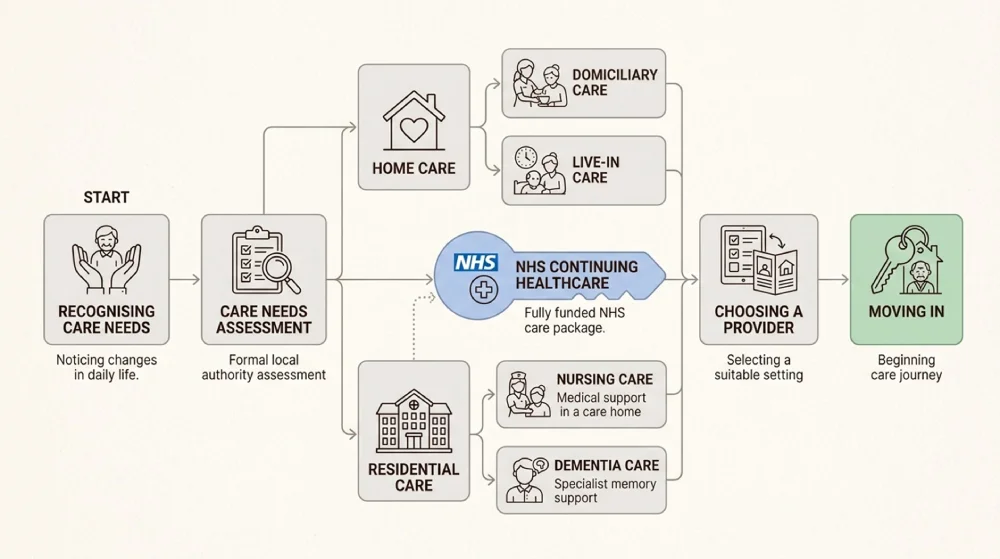
Understanding when it’s time to consider care
Recognising that a loved one needs additional support is often the hardest step. Many families wait until a crisis occurs a fall, a hospital admission, or a bout of confusion before addressing care needs. Starting conversations early can help everyone prepare and make better decisions.
Signs that care may be needed
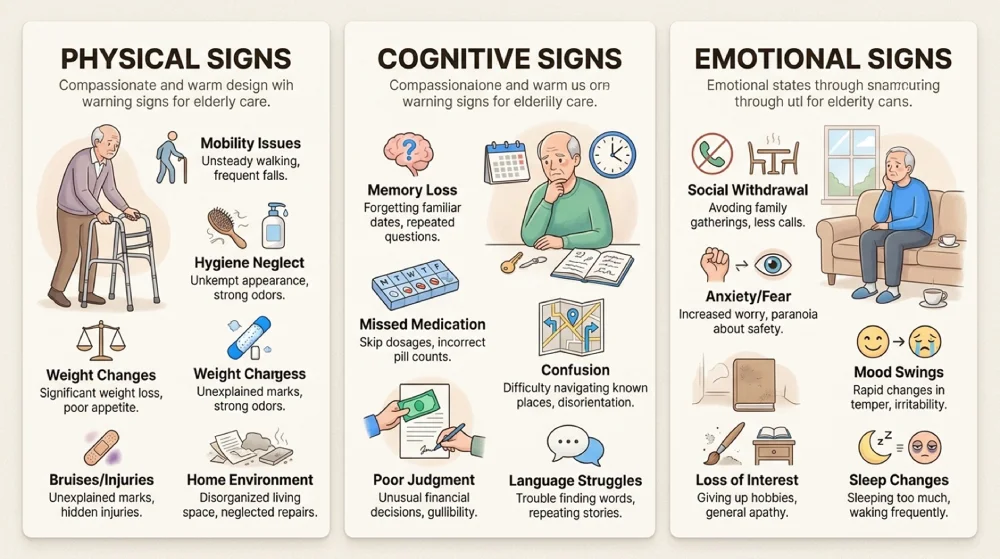
Physical changes often signal that support is required. Look for difficulty with mobility or frequent falls, noticeable weight loss or poor nutrition, neglected personal hygiene, unexplained bruises, or difficulty managing stairs.
Cognitive indicators can be subtler but equally important. Memory problems affecting daily life, such as forgetting to take medication or leaving appliances on, may indicate it’s time to seek help. Other signs include confusion about time or place, difficulty managing finances, or getting lost in familiar places.
Emotional and social signs matter too. Withdrawal from activities they once enjoyed, social isolation, mood changes, or loss of interest in hobbies can all suggest your loved one is struggling.
Starting the conversation
Bringing up care with an elderly parent requires sensitivity. Choose a quiet moment when you’re both relaxed, not during a crisis. Use “I” statements rather than accusations: “I’ve noticed you seem tired after climbing the stairs” works better than “You can’t manage the house anymore.”
Listen to their concerns and preferences. Many older people fear losing independence more than they fear physical decline. Acknowledging these feelings and involving them in decisions helps maintain their dignity and sense of control.
If you’d like guidance on having these conversations or understanding your options, our team at Serene Care Group is here to help. Contact us for a confidential discussion about your situation.
Types of elderly care available in the UK
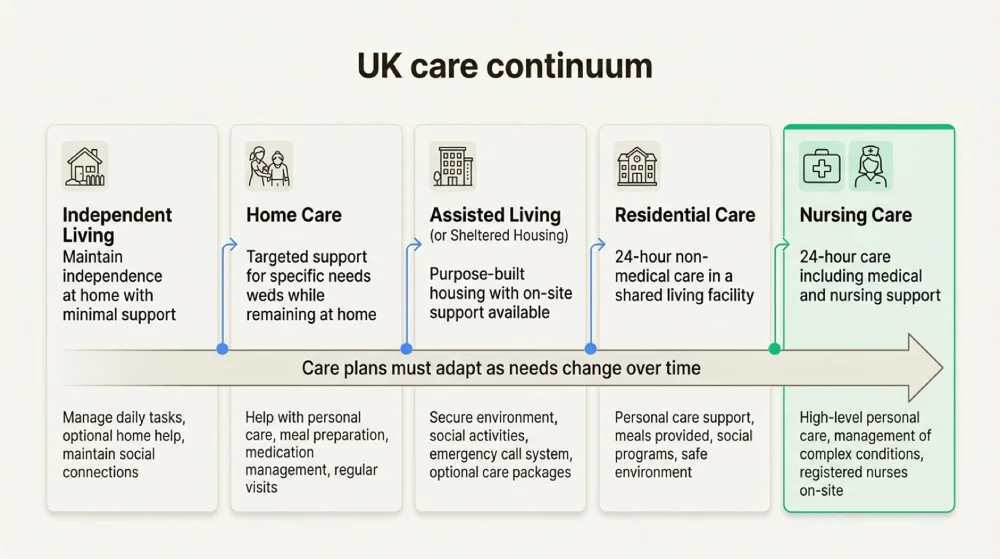
The UK offers various care options along a continuum, from support at home to full-time residential care. Understanding these choices helps you match the right level of support to your loved one’s needs.
In-home care options
Domiciliary care provides support with daily tasks while your loved one remains at home. A care worker visits at agreed times to help with personal care, meal preparation, medication reminders, or household tasks. This option maintains familiar surroundings and routines, which can be particularly beneficial for those with early-stage dementia.
Live-in care offers round-the-clock support from a carer who lives in the home. This suits those needing continuous supervision but wanting to stay in their own environment. Costs are often comparable to residential care, and the one-to-one attention can be invaluable.
Respite care provides short-term relief for family caregivers. Whether it’s a few hours a week or a two-week stay in a care home while you holiday, respite care prevents caregiver burnout and gives everyone a break.
Home adaptations and telecare can extend independence. Simple changes like grab rails, stairlifts, or walk-in showers reduce risks. Personal alarm systems and smart home technology can monitor wellbeing and summon help if needed.
Residential care options
Residential care homes provide accommodation, meals, and personal care for those who need help with daily activities but don’t require nursing care. Staff assist with bathing, dressing, and medication management whilst encouraging independence where possible.
Nursing homes offer 24-hour care from qualified nurses for those with complex medical needs. They’re equipped to manage conditions requiring regular medical attention, wound care, or specialist equipment.
Dementia care homes provide specialised environments for those living with Alzheimer’s or other forms of dementia. These homes feature secure layouts to prevent wandering, sensory stimulation, and staff trained in dementia care techniques.
Assisted living (also called extra care housing) offers self-contained flats with care support available as needed. Residents maintain independence whilst having access to communal facilities and on-site care staff.
Understanding the care continuum
Needs rarely stay static. A person might start with occasional domiciliary visits, progress to live-in care, and eventually move to residential care. The best care plans anticipate these transitions and adapt accordingly.
Many modern care homes, including those operated by Serene Care Group, offer different levels of care within one location. This means residents can “age in place” even as their needs increase, avoiding the disruption of moving between providers.
Assessing your loved one’s care needs
Before arranging any care, you’ll need a professional assessment of needs. This determines what type of care is appropriate for your loved one’s situation.
Getting a care needs assessment
Anyone can request a care needs assessment from their local council’s social services department. It’s free and available regardless of your financial situation. You can request one yourself, or a GP, nurse, or family member can do so on your behalf.
The assessment typically involves a social worker visiting your home to discuss:
- How you manage daily activities like washing, dressing, and preparing meals
- Your mobility and any risks of falls
- Your mental health and cognitive function
- Your social connections and emotional wellbeing
- Any health conditions and medications
The assessor uses national eligibility criteria to determine if you qualify for care support. To qualify, you must have needs arising from a physical or mental impairment and be unable to achieve two or more “care outcomes” (such as maintaining nutrition or managing toilet needs) without assistance.
Carer’s assessments
If you’re providing regular care, you’re entitled to a carer’s assessment from your local council. This looks at how caring affects your wellbeing and what support might help you continue, such as respite care, training, or help with household tasks.
Choosing the right care home
Selecting a care home is one of the most significant decisions you’ll make. Taking time to research, visit, and compare options ensures your loved one receives quality care in a supportive environment.
What to look for during visits
CQC ratings and reports provide an independent assessment of care quality. The Care Quality Commission inspects all registered care homes, rating them Outstanding, Good, Requires Improvement, or Inadequate. Read the full inspection reports on the CQC website they detail specific strengths and concerns.
Staffing matters enormously. Ask about staff qualifications, training, and turnover rates. High staff turnover often indicates poor working conditions that affect care quality. Observe how staff interact with residents during your visit: are they patient, respectful, and unhurried?
The physical environment should be clean, well-maintained, and accessible. But look beyond cleanliness. Is the home welcoming and homely, or institutional and clinical? Are there quiet spaces for privacy as well as communal areas for socialising?
Food and dining deserve attention. Ask to see sample menus and observe a meal if possible. Good care homes accommodate dietary preferences and cultural requirements whilst ensuring proper nutrition.
Activities and lifestyle contribute significantly to quality of life. Ask about the activities programme and whether residents help plan events. Are there opportunities for hobbies, outings, and maintaining interests?
Questions to ask providers
Prepare a list of questions before visiting:
- How do you create personalised care plans, and how often are they reviewed?
- What’s your approach to dementia care if relevant?
- How do you handle medical emergencies and out-of-hours care?
- What are your visiting policies? Can family visit anytime?
- How do you communicate with families about changes in condition or care?
- What’s included in the fees, and what costs extra?
- Can residents personalise their rooms with their own furniture and belongings?
Trusting your instincts
Beyond checklists and ratings, pay attention to how the home feels. Do residents appear content and engaged? Are they treated with dignity and respect? Does the atmosphere feel warm and welcoming?
Speak with current residents and their families if possible. Their experiences provide insights no brochure can match.
Visit at different times, an unannounced visit on a Sunday afternoon might reveal more than a scheduled weekday tour. At Serene Care Group, we encourage families to visit multiple times and speak openly with our team and residents.